
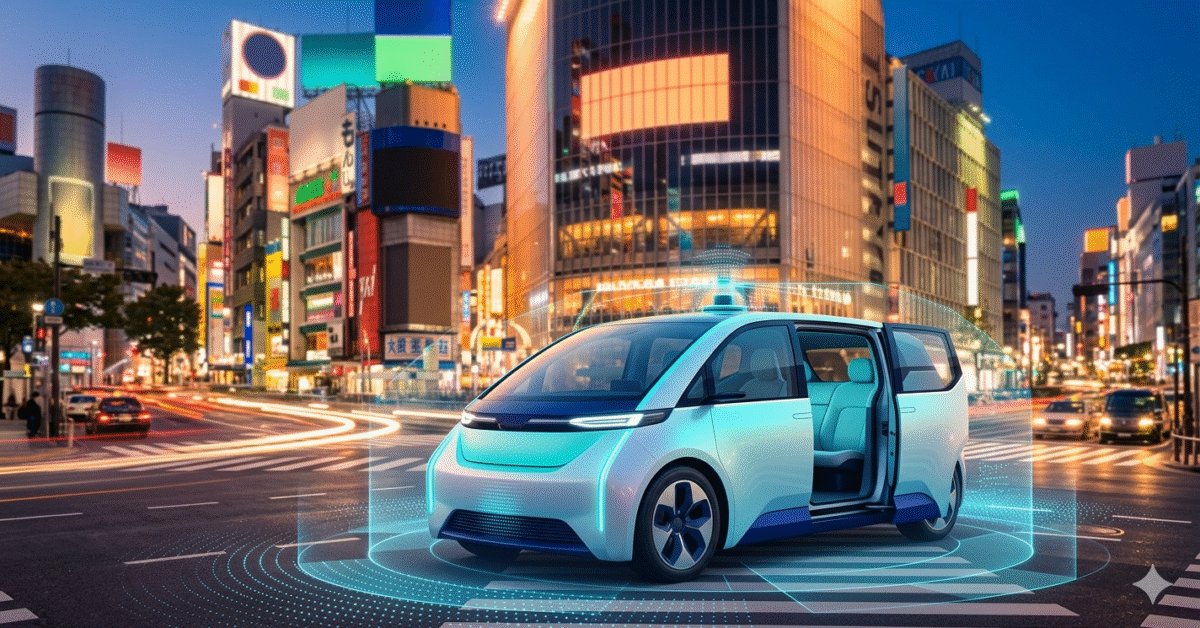
Japan’s taxi industry is dying. Not slowly. Not gracefully. It’s hemorrhaging 40,000 drivers annually while demand climbs 15% year-over-year. Go just raised ¥88.6 billion to bet everything on robots filling those empty seats.
Read that again — a taxi-hailing app just pulled off Japan’s biggest IPO of 2026, not to hire more drivers, but to eliminate the need for them entirely.
This isn’t a tech play. It’s a survival play. And if you’re a business owner watching from the sidelines, you’re missing the blueprint for how legacy industries reinvent themselves before extinction.
Go went public Tuesday on the Tokyo Stock Exchange. The stock popped 12% on debut. Institutional investors fought for allocation. Everyone’s celebrating.
But here’s what the press releases won’t tell you: Go isn’t buying time. They’re buying the future — one robotaxi and one acquisition at a time.
Japan’s Driver Crisis Is Worse Than You Think
Japan has 2.3 million fewer working-age adults than it did five years ago. The median taxi driver age hit 62 in 2024. By 2030, industry projections show a shortfall of 240,000 professional drivers nationwide.
The math is brutal and irreversible. Immigration policies remain restrictive. Birth rates continue their 50-year collapse. No amount of wage increases or recruitment campaigns will manufacture humans who don’t exist.
Go controls 70% of Japan’s taxi-hailing market. They process 45 million rides annually. Their entire business model depends on having someone behind the wheel.
So what do you do when your core resource is evaporating?
You stop pretending the problem is solvable with conventional thinking. You pivot to autonomous vehicles before your competitors realize the game changed.
That’s not desperation. That’s strategic clarity.
The ¥88.6 Billion War Chest
Let’s break down where this money actually goes.
Go allocated ¥35 billion specifically for autonomous vehicle development and deployment. Another ¥28 billion targets acquisitions — smaller mobility companies, regional taxi operators, and logistics startups with complementary technology.
The remaining ¥25 billion funds operational expansion and debt reduction.
Here’s what nobody’s saying: Go isn’t building robotaxis from scratch. They’re partnering with Tier 1 autonomous vehicle developers and integrating existing technology into their platform. The capital expenditure focuses on fleet deployment, regulatory navigation, and network effects — not R&D moonshots.
This is the Toyota playbook applied to mobility services. Don’t invent. Integrate. Scale ruthlessly.
The Acquisition Strategy
Go’s M&A targets reveal their actual thesis.
They’re hunting regional taxi operators with aging owner-operators desperate for exit liquidity. These companies bring licenses, routes, and local regulatory relationships. Go brings capital, technology, and a national platform.
The consolidation math works like this: acquire at 4-5x EBITDA, strip redundant overhead, migrate customers to the Go app, and eventually swap human drivers for autonomous vehicles as regulations permit.
By 2028, Go expects to operate 15,000 autonomous vehicles across 12 major Japanese cities. That’s not a press release fantasy. That’s the projection they gave institutional investors during the roadshow.
Why This Matters Beyond Japan
The conventional wisdom says autonomous vehicles remain a decade away from meaningful commercial deployment. Tesla’s robotaxi promises keep slipping. Waymo operates in limited geographies. Cruise imploded after a pedestrian incident.
The conventional wisdom is wrong because it ignores regulatory arbitrage.
Japan’s government actively wants robotaxis to succeed. The Ministry of Land, Infrastructure, Transport and Tourism fast-tracked autonomous vehicle legislation in 2024. Municipalities compete to host pilot programs. The demographic crisis creates political will that doesn’t exist in countries with healthier population pyramids.
Go isn’t fighting regulators. They’re partnering with them. The company has embedded personnel in three separate government working groups drafting AV standards.
This regulatory capture strategy — building relationships before rules solidify — creates moats that pure technology advantages cannot replicate.
For business owners watching from other industries: this is how you position for regulatory disruption. You don’t wait for rules to emerge and then comply. You help write them.
The Real Competition Isn’t Who You Think
Sony Honda Mobility announced autonomous vehicle ambitions last quarter. Toyota’s Woven City continues burning cash on future mobility concepts. SoftBank’s portfolio includes multiple autonomous vehicle bets.
None of them have what Go has: 45 million annual customer transactions and the data exhaust that generates.
Autonomous vehicles don’t fail because the technology doesn’t work. They fail because nobody knows where to deploy them profitably. Go knows exactly which routes, which times, and which customer segments generate the highest margins.
Their dataset includes pickup locations, destinations, time-of-day patterns, surge pricing acceptance rates, and customer lifetime value calculations across 47 prefectures.
That’s not a taxi company. That’s an AI training ground with a transportation side hustle.
The robotaxi race isn’t about who builds the best sensor array. It’s about who understands demand patterns with enough granularity to deploy capital efficiently.
Go wins that race before it starts.
What Business Owners Should Steal From This Playbook
Stop thinking about Go as a Japanese taxi company. Start thinking about them as a case study in strategic pivots.
Lesson one: Your current business model is a data collection mechanism for your next business model. Go spent eight years building market share in taxi-hailing. Every ride generated intelligence about Japanese mobility patterns. That intelligence now funds their autonomous vehicle transition.
What data does your business generate that you’re currently ignoring? What future business model does that data enable?
Lesson two: Demographic trends are strategy. Go didn’t wake up one morning and decide robotaxis sounded cool. They stared at population projections and realized their supply chain (human drivers) was entering terminal decline. They moved before the crisis became acute.
What demographic or structural shifts threaten your business in 10 years? What would you build today if you took those trends seriously?
Lesson three: Regulatory relationships are assets. Go’s government partnerships didn’t happen accidentally. They invested years cultivating relationships with transportation ministry officials. When autonomous vehicle legislation moved forward, Go had seats at the table.
Who regulates your industry? What’s your relationship with them? Are you waiting for rules to happen to you, or helping shape them?
What to Watch
The Bottom Line
Go’s ¥88.6 billion IPO isn’t about taxis. It’s about a company staring at demographic extinction and choosing to evolve rather than die.
Japan’s driver shortage isn’t a problem Go needs to solve. It’s the market condition that makes their robotaxi bet inevitable — and potentially unstoppable.
The autonomous vehicle future everyone keeps predicting for “someday” is arriving in Japan first, funded by the biggest IPO of 2026, executed by a company that already owns the customer relationship.
Business owners watching from other industries should take notes. The playbook is clear: collect data, anticipate structural shifts, capture regulatory relationships, and pivot before your competitors realize the game changed.
Go eyes robotaxis because they have no other choice. And that’s exactly why they might pull it off.
About the author

Ahad Waseem is a writer, entrepreneur, investor, and content creator. He’s a business and technology expert and writes for a number of prestigious internet publications. Ahad holds a particular interest in politics, economics, and philanthropy and has been featured in Miami Herald, The Sun News, The State, Charlotte Observer, and the Centre Daily Times. He is also launching a nonprofit organization to transform societal norms in South Asia.